Congress Fracture: Senior Leaders Defy Rahul Gandhi on Policy, BJP Attacks
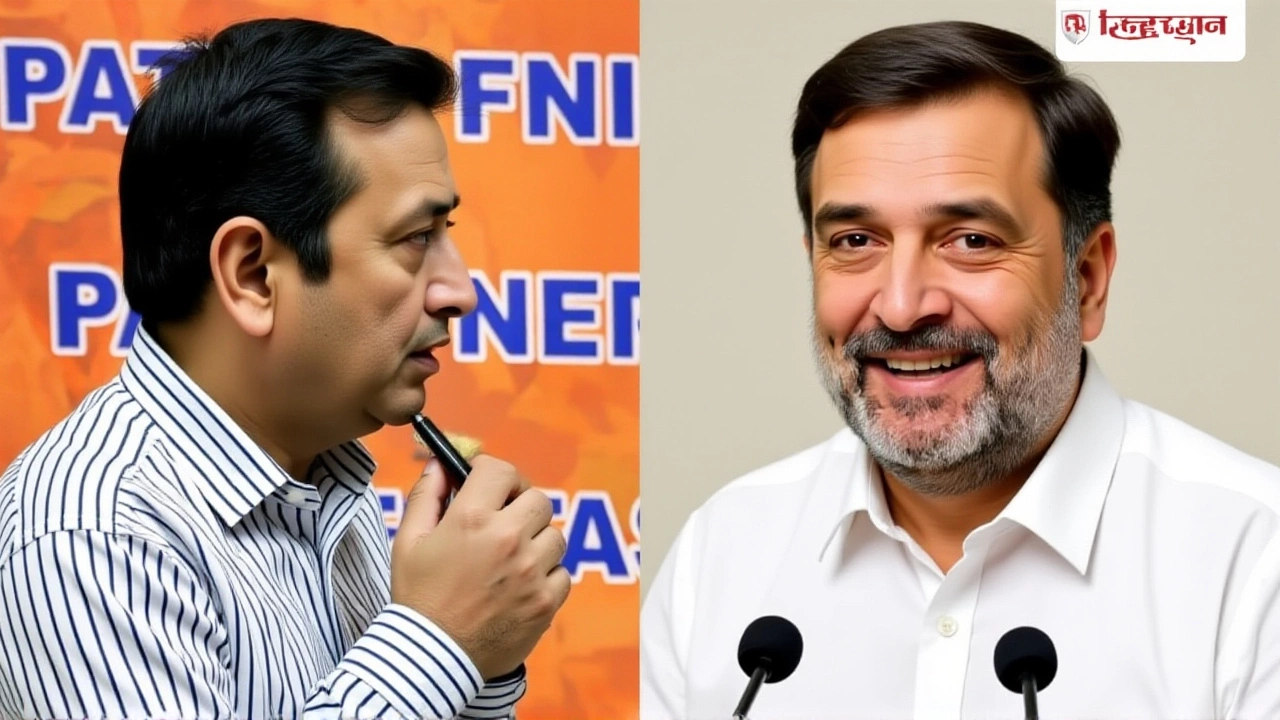
The Indian National Congress is facing a severe internal crisis as senior leaders publicly contradict the party’s official stance on critical national issues. On April 4, 2026, reports emerged that Rahul Gandhi, Leader of Opposition in the Lok Sabha, is struggling to maintain unity while simultaneously battling intense external pressure from the ruling Bharatiya Janata Party.
Here’s the thing: it’s not just political posturing. We’re seeing a rare public split where top-tier Congress figures are praising the very government they are supposed to be opposing. From foreign policy disagreements to domestic supply chain debates, the message coming out of the opposition camp is anything but unified.
A Foreign Policy Schism
The rift became most visible regarding India’s diplomatic approach to the escalating conflict involving the United States, Israel, and Iran. Rahul Gandhi has been relentlessly attacking the central government’s handling of the situation, labeling its foreign policy as "compromising." He argues that New Delhi is giving too much ground in a high-stakes geopolitical theater.
But wait—his own colleagues disagree. Shashi Tharoor, Member of Parliament, offered a starkly different perspective. Instead of echoing Gandhi’s criticism, Tharoor described the government’s actions as "responsible statecraft." This isn’t a minor semantic difference; it’s a fundamental clash over whether the country is being led wisely or weakly. When your MP calls your leader’s core strategy flawed while praising the opponent’s competence, you have a leadership problem.
The LPG Dispute and Internal Dissent
Domestically, the friction continues over the alleged liquefied petroleum gas (LPG) shortage. Gandhi has framed this as a major failure of the Narendra Modi-led government, claiming citizens are suffering due to supply gaps. However, Kamal Nath, former Chief Minister of Madhya Pradesh, publicly downplayed the issue.
"There is no such shortage," Nath stated bluntly. "An atmosphere is being created that there is a shortage." By dismissing the crisis as manufactured noise, Nath effectively neutralized one of Gandhi’s key attack vectors. This move didn’t just confuse voters; it signaled to the base that the party’s narrative machinery is broken. Alongside Anand Sharma and Manish Tewari, these leaders have reportedly made comments that have "increased the difficulties of the Congress leadership," according to media analysis.
Mockery and Open Revolt?
Things got even more personal. Reports indicate that Digvijay Singh, another heavyweight in the party, released a video mocking Rahul Gandhi. In Indian politics, public ridicule from a senior mentor figure is often interpreted as a soft coup or a sign of deep-seated frustration with the current leadership style. Meanwhile, Shashi Tharoor and Manish Tewari were reported to have praised the Modi government’s initiatives, further isolating Gandhi’s aggressive opposition tactics.
This isn’t just about personality clashes. It reflects a strategic dilemma: should the Congress continue with hardline confrontation, or pivot toward pragmatic engagement? The current lack of consensus suggests the party hasn’t decided yet.
Street Clashes and Accusations of Treason
While the elite debate policy, things heated up on the streets. Following a shirtless protest by Youth Congress workers at an AI summit last Friday, police arrested several demonstrators. The incident triggered immediate backlash from the BJP.
BJP workers gathered in large numbers, accusing Gandhi of inciting disorder. The rhetoric turned vitriolic, with opponents branding him a "soldier of Lashkar-e-Taiba"—a serious allegation implying ties to terrorism—and accusing him of insulting the nation during his overseas visits. The clash between BJP and Congress supporters highlighted how fragile the political peace has become. One reporter asked rhetorically, "Did you send them yesterday to protest?" directly linking Gandhi to the unrest.
Why This Matters Now
The combination of internal dissent and external aggression puts Gandhi in a precarious position. If he cracks down on dissenters like Tharoor or Nath, he risks alienating the party’s intellectual wing. If he ignores them, he loses control of the narrative. Meanwhile, the BJP is exploiting every moment of disunity to paint the entire opposition as chaotic and unreliable.
With elections potentially looming and global tensions rising, the need for a cohesive opposition voice is greater than ever. Right now, that cohesion appears to be missing.
Frequently Asked Questions
Who are the main Congress leaders opposing Rahul Gandhi's stance?
Key figures include Shashi Tharoor, who called the government's foreign policy "responsible statecraft," Kamal Nath, who denied the existence of an LPG shortage, and Digvijay Singh, who publicly mocked Gandhi. Manish Tewari and Anand Sharma have also expressed views diverging from the party line.
What was the controversy surrounding the AI summit protest?
Youth Congress workers staged a shirtless protest at an AI summit on a Friday, leading to their arrest by police. This sparked violent clashes with BJP workers, who accused Rahul Gandhi of inciting anarchy and damaging India's international image through such disruptive tactics.
How does Shashi Tharoor's view differ from Rahul Gandhi's on foreign policy?
Rahul Gandhi criticized the government's approach to the US-Israel-Iran conflict as "compromising," suggesting weakness. In contrast, Shashi Tharoor defended the same policies as "responsible statecraft," indicating support for the government's diplomatic balance rather than opposition.
What allegations has the BJP made against Rahul Gandhi?
The BJP has accused Gandhi of spreading anarchy, attempting to topple the Modi government, and insulting the country. More severely, some BJP activists have labeled him a "soldier of Lashkar-e-Taiba," alleging treasonous sympathies based on his past statements abroad.
Is there actually an LPG shortage in India?
This remains a point of contention. While Rahul Gandhi claims there is a significant supply crisis affecting citizens, former MP Kamal Nath asserts that no shortage exists and that the narrative is artificially created to criticize the government. Independent verification of supply data would clarify this dispute.